
15 Sources of Finance for Business: Which One Fits Your Growth Stage?
Explore sources of finance for business, including types, meaning, and examples. Learn how to choose the right funding based on cash flow and growth needs.

A delayed client payment shouldn't derail your business.
You’ve closed deals, invoices are raised, and revenue is on paper, yet payroll is due, suppliers are waiting, and growth plans are on hold. This isn’t a funding problem. It’s a timing problem.
This challenge is common.
According to estimates from the RBI and the MSME Ministry, India’s MSME credit gap still stands at over ₹20–25 lakh crore, driven not just by a lack of access but also by a mismatch between financing structures and actual business cash flows.
Most businesses do not fail due to a lack of capital. They struggle because they select the wrong type of capital at the wrong moment.
Use this guide to choose the right source of finance at the right time, build a capital strategy that actively accelerates your business.
Key Takeaways
- Businesses can raise funds through internal sources like retained earnings or external sources like debt, equity, trade credit, lease financing, and government schemes.
- The right source of finance depends on business stage, cash flow stability, collateral availability, growth plans, and whether the business wants non-dilutive capital or is open to dilution.
- Short-term needs such as payroll, inventory, or receivables gaps should be matched with short-term funding, while expansion, capex, or acquisitions need longer-term capital.
- Choosing the wrong financing structure can create unnecessary repayment pressure, weaken cash flow, or dilute ownership for a problem that did not require equity.
- Recur Club helps startups and SMEs access non-dilutive debt options aligned with their cash flow, funding needs, and growth stage.
What Are the Sources of Finance?
Sources of finance refer to the various channels through which a business or individual raises funds to meet financial requirements, covering both day-to-day operations and long-term growth investments.
No single source of capital can serve every business need. A company managing payroll gaps or inventory cycles requires very different funding compared to one investing in expansion, acquisitions, or technology.
Similarly, early-stage startups often rely on equity or founder capital, while mature businesses with stable cash flows can access structured debt more efficiently. Risk appetite also plays a role; some founders prioritize ownership and control, while others trade equity for faster growth.
This is why most businesses don’t depend on just one source; they build a capital mix aligned with their stage, cash flow, and growth strategy.
At a high level, these sources can be divided into internal (generated within the business) and external (raised from lenders, investors, or financial institutions), which we’ll explore next.
Also read: What is a Business Loan: Explore Meaning and Types
Classification of Sources of Finance
The same funding source can behave very differently depending on its tenure, cost, and control implications. Because of this, businesses don’t just look at what capital they raise, but also how it is structured.
Here’s a simple way to classify business finance across three key dimensions:
1. By Duration
This classification helps you match funding with how long you actually need the capital.
|
Duration |
Time Horizon |
Typical Use Case |
|
Short-Term |
Up to 1 year |
Day-to-day operations, cash flow gaps |
|
Medium-Term |
1 to 5 years |
Asset purchases, operational expansion |
|
Long-Term |
5+ years |
Expansion, capex, acquisitions |
2. By Ownership
This classification focuses on control and repayment obligations.
|
Type |
Description |
Examples |
|
Owned Capital |
Funds contributed by owners or shareholders |
Equity capital, retained earnings |
|
Borrowed Capital |
Funds raised through loans that must be repaid |
Debt, debentures |
3. By Source
This view helps distinguish whether funds are generated internally or raised externally.
|
Source Type |
Description |
Examples |
|
Internal |
Generated within the business |
Retained earnings, reserves |
|
External |
Raised from outside entities |
Banks, NBFCs, investors, capital markets. |
Recur Club gives fast access to external debt aligned with your business needs.

15 Sources of Finance for Different Business Needs

1. Debt Capital
Debt financing offers funds without giving up equity. Businesses repay the borrowed amount with interest, typically over fixed terms.
Recur Club connects companies to 150+ lenders offering customized debt structures like structured term loans, acquisition financing, and working capital loans. You stay in control while accessing the capital you need.
2. Venture Debt
Venture debt is a hybrid form of debt designed for venture-backed companies with strong growth potential. It complements equity funding and extends the runway without immediate dilution.
3. Working Capital Loans
Working capital loans are short-term loans that help businesses cover day-to-day operational needs, like payroll, inventory, or receivables. They’re critical during seasonal fluctuations or while waiting on client payments.
Recur Club offers working capital financing based on your cash flow and business performance, not just collateral.
4. Equity Capital
Equity capital means raising funds by giving up a portion of ownership, usually through angel investors or venture capital firms. It works best for businesses chasing aggressive growth or entering new markets.
But equity comes at a cost: diluted control, longer fundraising cycles, and pressure for exponential returns.
Also read: Understanding Causes and Effects of Equity Dilution
5. Revenue-Based Financing (RBF)
In revenue-based financing, repayments are tied to your monthly revenue. When you earn more, you repay more and vice versa.
It’s ideal for D2C, SaaS, or subscription-led businesses with consistent inflows. Recur Club facilitates RBF through lenders who understand your model and align capital with your revenue cycle.
6. Lease Financing
Lease financing allows businesses to access equipment, vehicles, or real estate without buying them outright. You pay in regular intervals, preserving cash while operating efficiently.
It’s especially useful in manufacturing, logistics, and capex-heavy businesses.
7. Term Loans
Term loans are fixed-duration borrowings used for long-term investments, like capacity expansion, equipment upgrades, or refinancing.
Recur Club delivers curated term sheets within 48 hours, matching your repayment capacity and growth plan.
Also read: Short-Term vs Long-Term Loans: Benefits and Differences
8. Crowdfunding
Crowdfunding allows businesses to raise small investments from a large number of backers, usually via online platforms.
It’s best suited for product-first or community-driven ventures but is less relevant for B2B or service-led companies.
Also read: Best Crowdfunding Sites for Startup Capital
9. Accounts Receivable Financing
AR financing lets you convert receivables into upfront funds, improving liquidity and reducing reliance on delayed client payments. Recur Club offers invoice-based funding structures tailored to your collections cycle.
10. Retained Earnings
Retained earnings refer to profits reinvested back into the business instead of being distributed as dividends. It’s one of the most cost-effective ways to fund growth without relying on external capital. Best suited for stable, profitable businesses looking to scale organically while maintaining full ownership and control.
11. Trade Credit
Trade credit is a short-term financing option where suppliers allow businesses to purchase goods or services and pay at a later date. It helps manage cash flow without immediate outflows.
Commonly used by inventory-heavy or supply chain-driven businesses to maintain operations without upfront capital strain.
12. Debentures
Debentures are long-term debt instruments issued by companies to raise capital at a fixed interest rate. They are typically unsecured but backed by the company’s creditworthiness.
Ideal for established businesses looking to raise structured debt, though they come with fixed repayment obligations and regulatory requirements.
13. Commercial Papers (CP)
Commercial papers are unsecured, short-term debt instruments issued by financially strong companies to meet immediate liquidity needs. They are typically issued at a discount and redeemed at face value.
Best suited for large, creditworthy businesses managing short-term funding gaps efficiently.
14. Public Deposits
Public deposits allow businesses to raise funds directly from individuals for short to medium-term needs, usually at a fixed interest rate.
Often used by MSMEs as an alternative to traditional bank loans, offering relatively lower borrowing costs while staying within regulatory frameworks.
15. Government Schemes & Subsidies
Government schemes and subsidies provide financial support to businesses through grants, low-interest loans, or credit guarantees. These initiatives are designed to promote growth across MSMEs and startups.
They offer a non-dilutive and often subsidized source of funding, making them highly attractive for businesses looking to reduce capital costs.

Choosing the Right Finance for Your Business
With over 2 lakh DPIIT-recognised startups in India as of December 2025, the need for funding options tailored to different growth stages has become increasingly important.
Key Decision Criteria
Alt text:Key Decision Criteria
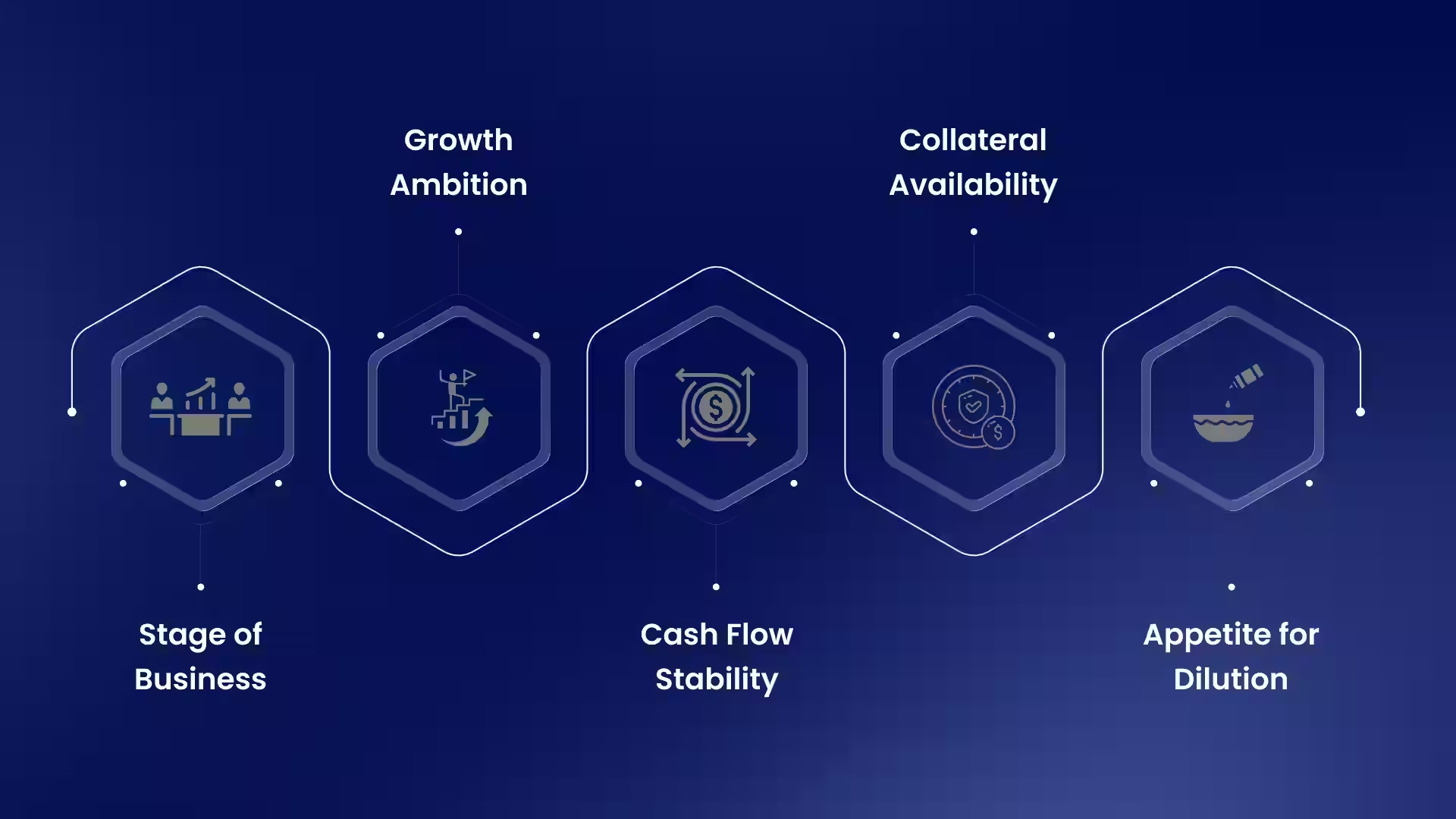
Before choosing a funding source, evaluate your situation across these five factors:
- Stage of Business: Early-stage businesses lean toward equity, crowdfunding, or government schemes. Growth-stage companies can access venture debt, RBF, and working capital loans, while mature businesses can use term loans, debentures, or commercial papers.
- Growth Ambition: Aggressive expansion typically requires equity, venture debt, or large term loans. Steady growth can be supported through retained earnings, trade credit, or working capital financing.
- Cash Flow Stability: Predictable cash flows suit fixed obligations like term loans, debentures, or lease financing. Volatile revenues are better aligned with flexible options like revenue-based financing or accounts receivable financing.
- Collateral Availability: If you have assets, secured options like term loans or lease financing are viable. Without collateral, consider unsecured debt (working capital loans), RBF, venture debt, or equity.
- Appetite for Dilution: If retaining ownership is key, prioritize debt (term loans, working capital, debentures) or internal funding (retained earnings, trade credit). If dilution is acceptable, equity or crowdfunding can unlock larger capital.

Quick Decision Tree
Use this as a starting point to narrow down your options:
|
Question |
Answer |
Recommended Path |
Examples |
|
Do you want to retain equity? |
Yes |
Debt Financing |
Term Loans, Venture Debt, P2P Lending |
|
No |
Equity Financing |
Angel Investors, Venture Capital |
|
|
Is the funding needed short-term? |
Yes |
Asset-Based / Revolving |
Invoice Financing, Trade Credit |
|
No |
Long-Term Capital |
Debentures, Equity, 5-Year Term Loans |
Still deciding? Let our debt capital advisors help you choose and access the right capital structure that's built around your business goals.
When to Avoid Certain Sources of Finance
Choosing the wrong type of capital can create more stress than it solves. The issue isn’t access, it’s alignment.
Don’t use term loans for working capital gaps
Term loans come with fixed EMIs over longer tenures. Using them for short-term needs like payroll or inventory creates unnecessary repayment pressure long after the need is gone.
Don’t raise equity for short-term funding needs
Equity is expensive capital. Giving up ownership to solve temporary cash flow gaps leads to long-term dilution for a short-term problem.
Don’t use fixed EMI structures for volatile revenue
If your revenue fluctuates (common in SaaS, D2C, or seasonal businesses), rigid repayment schedules can strain cash flow during slower months.
Don’t choose based on availability alone
Just because capital is accessible doesn’t mean it’s the right fit. Misaligned financing often leads to higher costs, reduced flexibility, and operational stress.
Conclusion
There’s no one-size-fits-all funding, only the structure that fits your model, growth stage, and cash flow. The right capital reduces friction and drives momentum.
That’s where Recur Club steps in.
- Access capital up to ₹100 Cr
- Get tailored offers curated by a capital expert
- Receive your term sheet within 48 hours
Recur Club has facilitated over ₹3000 Cr in debt funding for 2000 high-growth businesses across sectors like D2C, SaaS, EV, Manufacturing, Logistics, Tech Services, and Healthcare.
Through financing facilitated by Recur Club, businesses including Wellversed, MoveInSync, and Freightify have achieved measurable results such as significant revenue growth, higher EBITDA, and smoother operational execution.
FAQs
Q1: What is the difference between internal and external sources of finance?
Internal sources of finance are funds generated within the business, such as retained earnings or reserves. External sources come from outside entities like banks, NBFCs, investors, or capital markets. While internal funding offers full control and no repayment obligations, external funding provides access to larger capital but may involve interest, dilution, or compliance requirements.
Q2: What are short-term vs long-term sources of finance?
Short-term sources of finance are used for immediate operational needs and typically have a tenure of up to one year (e.g., working capital loans, trade credit, commercial papers). Long-term sources are used for expansion, capex, or strategic investments and usually extend beyond five years (e.g., term loans, equity capital, debentures). The right choice depends on how long you need the funds and your repayment capacity.
Q3: Which source of finance is best for a small business in India?
There is no single “best” option; it depends on the business stage, cash flow, and funding need. Small businesses often start with working capital loans, trade credit, or government schemes for immediate needs. As they grow, they may explore term loans, revenue-based financing, or even equity. The key is choosing a structure that aligns with cash flow and avoids unnecessary financial strain.
Q4: What is the difference between debt and equity financing?
Debt financing involves borrowing money that must be repaid with interest, allowing businesses to retain full ownership. Equity financing involves raising capital by giving up a share of ownership in exchange for investment. While debt is typically faster and non-dilutive, equity is better suited for high-growth businesses that need large capital without immediate repayment pressure.
Q5: What is revenue-based financing?
Revenue-based financing (RBF) is a funding model where repayments are linked to a business’s monthly revenue. Instead of fixed EMIs, businesses pay a percentage of their revenue, higher in strong months and lower during slow periods. This makes RBF ideal for businesses with predictable but fluctuating cash flows, such as SaaS, D2C, or subscription-based models.
Q6: Can a business use multiple sources of finance at the same time?
Yes, and most growing businesses do. Relying on a single funding source often limits flexibility and increases financial risk. A well-structured capital mix might combine working capital loans for day-to-day operations, a term loan for expansion, and trade credit to manage supplier payments. The goal is to match each funding type to a specific need, so repayment obligations never outpace cash flow.
Q7: What are the main sources of finance for startups in India?
Early-stage startups in India typically rely on a combination of founder capital, angel investors, venture capital, government schemes like SIDBI or Startup India, and crowdfunding. As they mature and generate revenue, they can access venture debt, revenue-based financing, and working capital loans without diluting equity further. The right mix depends on the startup's traction, revenue model, and growth timeline.
Q8: Is debt financing better than equity financing for MSMEs?
For most MSMEs, debt financing is generally preferred because it allows founders to retain full ownership and control. Options like term loans, working capital loans, and revenue-based financing provide capital without giving up equity. Equity makes more sense when the business needs large capital quickly and is comfortable with investor involvement. That said, the right answer always depends on the business's cash flow stability, growth ambition, and repayment capacity.
Q9: What is trade credit and how does it help businesses manage cash flow?
Trade credit is an arrangement where suppliers allow businesses to purchase goods or services now and pay at a later date, typically 30 to 90 days. It acts as an interest-free short-term funding source that helps businesses manage cash flow without borrowing from a bank. It is especially useful for inventory-heavy businesses that need to stock up before revenue comes in, reducing the pressure of immediate cash outflows.
Q10: How do government schemes and subsidies work as a source of finance for businesses?
Government schemes provide financial support through grants, credit guarantees, or subsidized loans via programs like CGTMSE, MUDRA, and PLI schemes. Unlike traditional debt, these are often non-dilutive and come at a lower cost of capital, making them highly attractive for MSMEs and startups. The trade-off is that eligibility criteria can be narrow, documentation requirements are often extensive, and disbursement timelines may be slower compared to private lenders.
Related Articles

Solving Cash Flow Gaps: The Role of Working Capital Loans for Indian Startups in 2026
Explore when a loan for working capital is useful, its key uses, and how businesses can manage expenses and growth without cash flow gaps.

Confidential Invoice Discounting: Meaning, How It Works, and When to Use It for SME Cash Flow
Understand confidential invoice discounting, how it works, costs, and when SMEs should use it for faster, non-dilutive working capital.

Capital Efficiency: Meaning, Formula, and How to Improve It for Smarter Business Growth
Learn what capital efficiency means, how to calculate it, and how founders can improve it to grow faster without wasting capital.
Talk to our experts and find the right financing solution.
Talk to Our Experts →