
AP Financing vs Invoice Financing: A Practical Guide for Indian SMEs
Confused between invoice financing and payable financing? This guide breaks down differences, costs, and when each makes sense.

Late customer payments and upfront supplier bills can stretch your cash flow from both sides. If you’re running a growing business, this gap shows up quickly in delayed inventory, slower hiring, or constant trade-offs on where cash goes next.
In India, many B2B businesses operate on 30–90 day payment cycles. That means revenue exists, but cash isn’t available when you need it. More than 70% of B2B invoices in India are paid late, which keeps a large portion of working capital locked at any given time.
As a result, founders and finance leaders often consider options like accounts payable financing and invoice financing to keep operations stable.
These two options address different sides of the same problem. One helps manage outgoing payments, the other speeds up incoming cash. Choosing the wrong one can increase costs or create friction with suppliers or customers.
Let’s break down how each works and how to choose the right fit for your business.
Key takeaways
Accounts payable financing helps you manage supplier payments, while invoice financing helps you access cash stuck in unpaid customer invoices.
Invoice financing is often used as an umbrella term, with invoice discounting and invoice factoring working differently in terms of control and collections.
The right option depends on where your cash is blocked, outgoing payments to suppliers or incoming payments from customers.
Costs, risk exposure, and impact on business relationships vary significantly between these financing types.
A clear view of your working capital cycle makes it easier to choose a non-dilutive financing structure that supports growth.
Why You’re Running Short on Cash Even When Sales Are Strong
Strong sales don’t always translate into available cash. In many businesses, revenue is recorded the moment an invoice is raised, but the actual cash may come in 30, 60, or even 90 days later. At the same time, supplier payments, salaries, and operational expenses don’t wait.
This creates a gap. Money is coming in, but not when you need it. And money is going out, often sooner than expected.
To understand this clearly, break your cash flow into two parts:
Accounts receivable (AR): Money customers owe you
Accounts payable (AP): Money you owe suppliers and vendors
When customers delay payments, your receivables increase. When supplier dues come up, your payables demand immediate cash. The pressure builds when these two cycles don’t align.
This is where most businesses go wrong; they focus on revenue growth, but not on how cash actually moves through the business.
Why this matters is simple: if you don’t identify whether your problem is delayed inflow or immediate outflow, you may choose the wrong financing solution. And that can increase costs instead of solving the issue.
Once you understand where the gap is, the next step is to look at solutions that address each side directly.
What Accounts Payable Financing Is
When supplier payments are due, but your cash isn’t available yet, the pressure builds quickly. You still need inventory, raw materials, or services to keep operations running, but paying vendors upfront can strain your working capital.
Accounts payable financing addresses this directly. A third party pays your suppliers on your behalf, and you repay that amount later on agreed terms. This allows you to meet supplier commitments without immediately using your own cash.
For businesses with regular vendor expenses, like inventory-led or manufacturing SMEs, this keeps the supply chain stable while giving you more flexibility on cash outflows.
It also keeps your receivables and customer relationships untouched, since the financing sits entirely on the payable side. But this comes with a clear requirement: your future inflows need to be predictable enough to handle fixed repayments without creating additional stress.
But supplier payments are only one side of the problem. In many cases, the bigger issue is delayed cash coming in.
Also Read: Top 10 Sources of Debt Financing Every Entrepreneur Should Know
What Invoice Financing Is
When you’ve delivered your product or service, but payments are still weeks away, your cash gets locked in receivables. This is common in B2B businesses where customers operate on 30–90 day credit cycles.
Invoice financing helps you access that cash earlier. Instead of waiting for customers to pay, you raise capital against unpaid invoices. The amount depends on the invoice value, customer credit profile, and agreed payment terms.
For startups and SMEs selling to enterprises or large distributors, this can significantly reduce the gap between revenue and available cash.
The impact is immediate. You can fund payroll, inventory, or growth initiatives without waiting for collections. Since this financing is tied to receivables, equity remains unchanged. However, depending on the structure, delays or defaults from customers can still affect your repayment obligations.
Both options improve cash flow, but they solve very different problems.
Also Read: Working Capital Loan Solutions in India

Accounts Payable Financing vs Invoice Financing: The One Difference That Matters
When cash flow starts getting tight, both accounts payable financing and invoice financing can seem like viable options. On the surface, they solve the same problem, you get access to capital without giving up equity.
But in practice, they address very different parts of your business. The decision comes down to one question: Where is your cash getting stuck?
Accounts payable financing solves a problem on the outgoing side of your cash flow. Invoice financing works on the incoming side. This distinction is what determines which option actually improves your liquidity.
Here’s a quick way to compare them from a decision-making lens:

This comparison matters because choosing the wrong option doesn’t fix the problem—it shifts it.
If your issue is delayed customer payments and you choose accounts payable financing, you’re adding repayment pressure without improving inflow. If your issue is supplier payments and you choose invoice financing, you may still struggle to meet immediate obligations.
The right choice depends entirely on whether your cash flow problem starts with money going out too soon or coming in too late.
Once you’re clear on that, the decision becomes straightforward.
If your business is dealing with both delayed receivables and immediate payment obligations, Recur Club connects you with lenders offering structures aligned with your cash flow cycles. Learn more.
When Should You Choose Accounts Payable Financing?
If your biggest pressure comes from supplier payments, accounts payable financing is the more relevant option.
This typically shows up when vendor dues are fixed, but your incoming cash is still a few weeks away. You may have steady demand and strong order flow, but paying upfront for inventory, raw materials, or services starts to strain your working capital.
In these situations, accounts payable financing helps you meet supplier commitments without disrupting operations. Your vendors get paid on time, while you get additional time to manage your cash outflows.
This works best when your revenue is predictable enough to support scheduled repayments. It’s especially useful for businesses that:
Depend heavily on vendors to operate
Need to maintain consistent inventory levels
Operate in cycles where purchases happen before collections
The key benefit here is continuity. You avoid delays in procurement and maintain supplier relationships without locking up your cash.
But not all cash flow issues come from outgoing payments. In many cases, the pressure builds because cash isn’t coming in fast enough.
When Should You Choose Invoice Financing?
If your challenge is delayed customer payments, invoice financing becomes the better fit. This is common in B2B setups where you’ve already delivered your product or service, but payments are scheduled weeks or months later. On paper, revenue looks strong, but your available cash doesn’t reflect it.
Invoice financing helps you bring that cash forward. Instead of waiting for customers to pay, you access funds against outstanding invoices and keep your operations moving.
This works best when you have:
Reliable customers with defined payment terms
A steady volume of invoices
Growth plans that depend on timely cash availability
The benefit here is liquidity. You reduce the gap between revenue and usable cash, which allows you to fund payroll, marketing, or expansion without delays.
In reality, many businesses deal with both delayed inflows and immediate outflows. That’s where the decision becomes less about choosing one and more about structuring both sides effectively.
The right choice often depends on your business model. Here’s how different industries typically approach it.
How Different Industries Use These Options
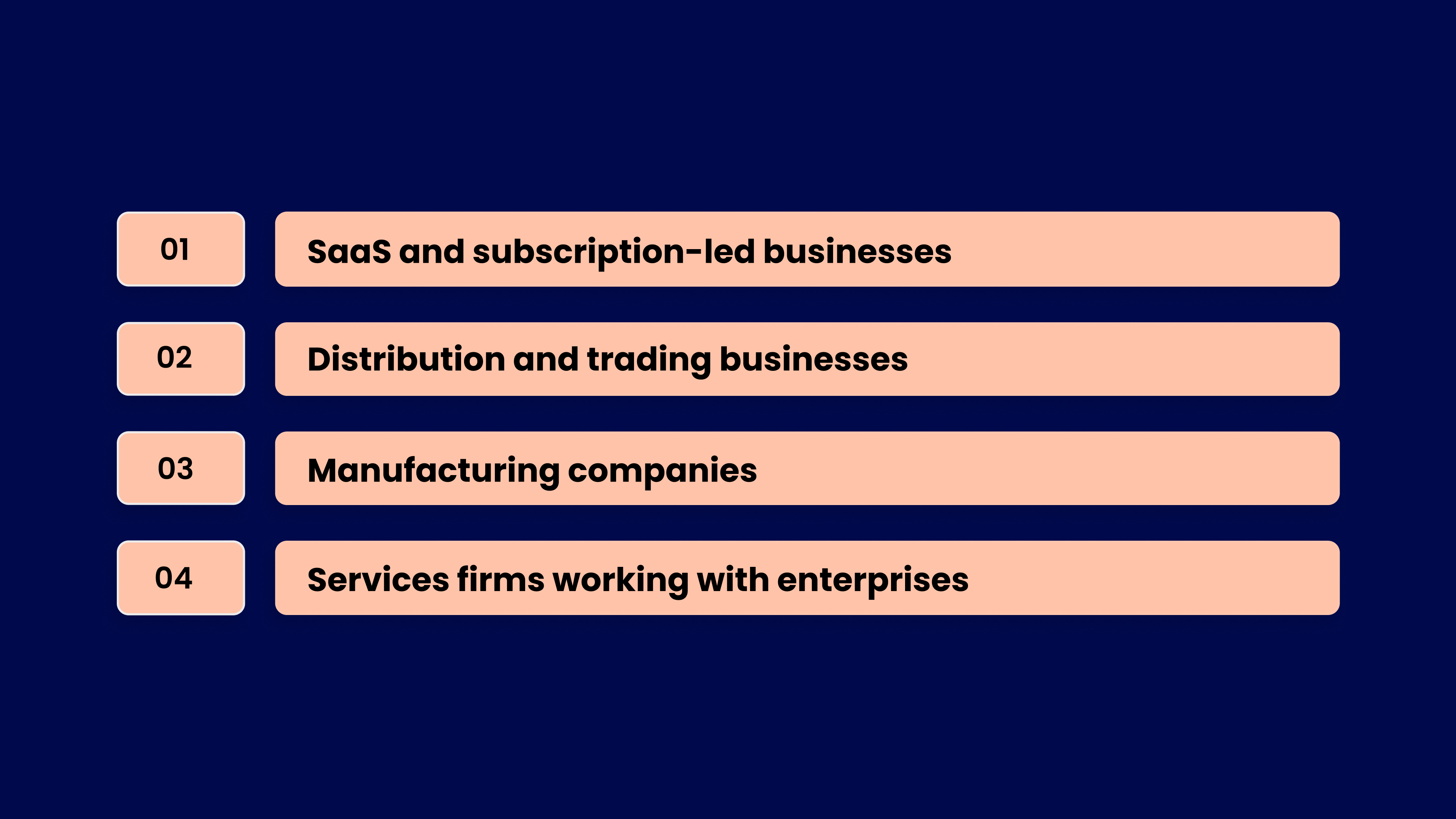
SaaS and subscription-led businesses
Predictable monthly collections make receivable-based structures more suitable once volumes grow. Funding against receivables helps smooth cash flow without changing billing cycles.Distribution and trading businesses
Frequent supplier payments and inventory turnover push these businesses toward accounts payable financing, where extending vendor payment timelines helps keep stock moving.Manufacturing companies
High upfront raw material costs and longer production cycles make accounts payable financing useful for managing supplier commitments without blocking cash.Services firms working with enterprises
Long payment terms (60–90 days) make invoice financing a common choice to fund payroll and operating costs while waiting for customer payments.
In situations like these, businesses often work with debt marketplaces such as Recur Club to evaluate multiple lenders and choose financing structures that align with their operating cash flows.

When You Might Need Both (And Why Most Businesses Get This Wrong)
Many businesses try to fix cash flow from just one side, either by speeding up inflows or delaying outflows. But in practice, both pressures often exist at the same time.
You may be waiting on customer payments while also needing to pay suppliers, manage payroll, or invest in inventory. Solving only one side can create temporary relief, but the underlying gap remains.
This is where a more structured approach helps. Instead of choosing between accounts payable financing and invoice financing, some businesses use both—aligning inflows and outflows more deliberately.
The challenge is that combining these options requires clarity on timing, repayment cycles, and cost. Without that, you risk layering debt in a way that adds pressure instead of reducing it.
If your business is dealing with both delayed receivables and immediate payment obligations, Recur Club, a debt marketplace, connects you with lenders offering financing structures aligned with your cash flow cycles.
Getting this balance right improves predictability and reduces constant pressure on working capital.
A Simple Framework to Choose the Right Option
Choosing between these options doesn’t need to be complicated. The decision becomes clear when you focus on where the pressure is coming from.
Start with three questions:
Where is your cash stuck?
In unpaid invoices - consider invoice financing
In upcoming supplier payments - consider accounts payable financingWhat is more urgent right now?
Managing operations - focus on payables
Unlocking growth - focus on receivablesHow predictable is your cash flow?
Stable inflows support structured repayments more comfortably
This matters because the right financing choice should reduce pressure, not shift it elsewhere in your business.
Once you answer these, the path becomes clearer.
Conclusion
Accounts payable financing and invoice financing both help manage cash flow, but they solve very different problems. One helps you handle outgoing payments, while the other helps you access incoming cash faster.
The key is not choosing what’s available, but choosing what fits your cash flow situation. When aligned correctly, debt becomes a way to maintain stability and support growth without giving up equity.
Recur Club, as a debt marketplace and capital partner, works with 150+ lenders to match businesses with financing structures that fit their cash flow cycles.
Advisory-led matching based on your business needs
Access to multiple debt options in one place
Transparent process with no hidden fees
If your cash flow is stretched between delayed payments and immediate expenses, the right financing structure can make a significant difference.
Recur Club helps you access non-dilutive capital tailored to your business, so you can manage operations and growth without unnecessary pressure. Connect with a capital expert.
FAQs
1. What is accounts payable financing?
Accounts payable financing is a form of debt that helps you manage supplier payments. A financing partner either pays your vendors on your behalf or gives you more time to settle dues, allowing you to preserve working capital while keeping operations running smoothly.
2. Do I send invoices to AP or AR?
Invoices you raise for your customers fall under accounts receivable (AR)—this is money owed to your business.
Accounts payable (AP) refers to bills you receive from suppliers or vendors, which your business needs to pay.
3. What is the difference between ABL and ABF?
Asset-Based Lending (ABL) is a broader financing structure where you raise capital against business assets like inventory, receivables, or equipment.
Accounts Receivable Financing (often referred to as ABF in some contexts) is more specific; it focuses only on raising funds against unpaid invoices.
In short, ABL covers multiple asset types, while invoice financing is limited to receivables.
4. What is another name for invoice financing?
Invoice financing is also commonly called Invoice discounting and Invoice factoring
Both involve raising funds against unpaid invoices, but they differ in how collections are handled and who manages customer payments.
5. What are the main types of assets in a business?
Businesses typically have four main types of assets: current assets like cash, receivables, and inventory; fixed assets such as machinery or equipment; financial assets like investments; and intangible assets such as brand value or intellectual property. For financing decisions, current assets, especially receivables, are the most relevant.
6. Is ABF the same as ABL?
No, they are related but not the same. Asset-Based Lending (ABL) is a broader structure where businesses raise capital against multiple assets such as inventory, receivables, or equipment. Asset-Based Financing (ABF) is often used more loosely and can refer to specific structures like invoice financing, where funding is tied primarily to receivables.
7. What is three-way matching in accounts payable?
Three-way matching is a process used before making supplier payments to ensure accuracy. It involves matching the purchase order, the supplier invoice, and the goods received note to confirm that what was ordered, received, and billed all align. This helps prevent errors, duplicate payments, and fraud.
8. What are the three main types of accounts in accounting?
The three main types of accounts are assets, liabilities, and equity. Assets represent what the business owns, liabilities represent what it owes, and equity reflects the owner’s stake. Accounts payable is classified as a liability, while accounts receivable is considered an asset.
9. What are the key phases of the accounting cycle?
The accounting cycle includes recording transactions, posting them to ledgers, preparing a trial balance, and making adjustments before closing the books. These steps ensure that financial statements accurately reflect business performance and cash flow.
10. What are the types of accounts payable?
Accounts payable can be broadly divided into trade payables and non-trade payables. Trade payables relate to suppliers for goods and services, while non-trade payables include expenses such as rent, utilities, or salaries. Most financing solutions are linked to trade payables.
11. Is accounts payable part of the balance sheet or P&L?
Accounts payable appear on the balance sheet as a liability because they represent money the business owes. It does not appear directly in the profit and loss statement, but it affects cash flow and overall working capital.
12. What is an invoice financing account?
An invoice financing account is a facility that allows businesses to raise funds against unpaid invoices. It connects receivables to a financing line, enabling access to cash soon after invoices are raised instead of waiting for customer payments.
Related Articles

Solving Cash Flow Gaps: The Role of Working Capital Loans for Indian Startups in 2026
Explore when a loan for working capital is useful, its key uses, and how businesses can manage expenses and growth without cash flow gaps.

Confidential Invoice Discounting: Meaning, How It Works, and When to Use It for SME Cash Flow
Understand confidential invoice discounting, how it works, costs, and when SMEs should use it for faster, non-dilutive working capital.

Capital Efficiency: Meaning, Formula, and How to Improve It for Smarter Business Growth
Learn what capital efficiency means, how to calculate it, and how founders can improve it to grow faster without wasting capital.
Talk to our experts and find the right financing solution.
Talk to Our Experts →