
Differences between Cash Inflow and Outflow: The Real Reason Your Business Feels Cash-Strapped
Discover how cash inflow, from sources like sales and investments, varies from outflow involving expenses and debt repayments.

Cash flow is the lifeblood of any business, yet it remains one of the most misunderstood aspects of financial management. Many businesses struggle with cash flow challenges, including rising staff and material costs, highlighting the need for a clear understanding of the differences between cash outflows and inflows.
On the upside, the first half of FY2024 experienced a remarkable surge in cash flows across India, with cash and bank balances soaring by 18% to nearly ₹10 trillion, marking the fastest growth pace in four years. This notable surge emphasises the importance of cash flows as a fundamental indicator of financial health and operational stability.
Want to understand cash flow's ins and outs? This article explains the differences between inflows and outflows and provides practical tips for keeping your finances healthy.
Key Takeaways
-
Cash inflow and outflow represent the movement of money into and out of a business, and understanding this difference is essential to maintain liquidity and avoid cash shortages.
-
Cash inflow is money coming into the business from sources like sales revenue, investments, loans, or grants, and it determines how much liquidity is available to run operations and fund growth
-
Cash outflow is money leaving the business for expenses such as salaries, rent, debt repayments, inventory, and capital expenditure, directly impacting available cash reserves
-
Net cash flow = total inflows − total outflows, and a positive cash flow means the business generates more cash than it spends, which improves stability, creditworthiness, and planning ability
-
Businesses often face cash flow gaps due to delayed payments, high upfront costs, irregular revenue, or GST-related timing mismatches, even when they are profitable on paper
-
To manage these gaps without slowing growth, platforms like Recur Club, an AI-native debt platform and marketplace, help startups and SMEs access timely, non-dilutive financing aligned with their cash flow cycles
Definition and Significance of Cash Flow
“Cash flow refers to the movement of cash in and out of a business.”
Cash flow refers to the movement of cash in and out of a business, representing net amounts entering and leaving the company over a given period. A Cash Flow Statement (CFS) tracks these movements, offering a clear picture of a company's financial position.
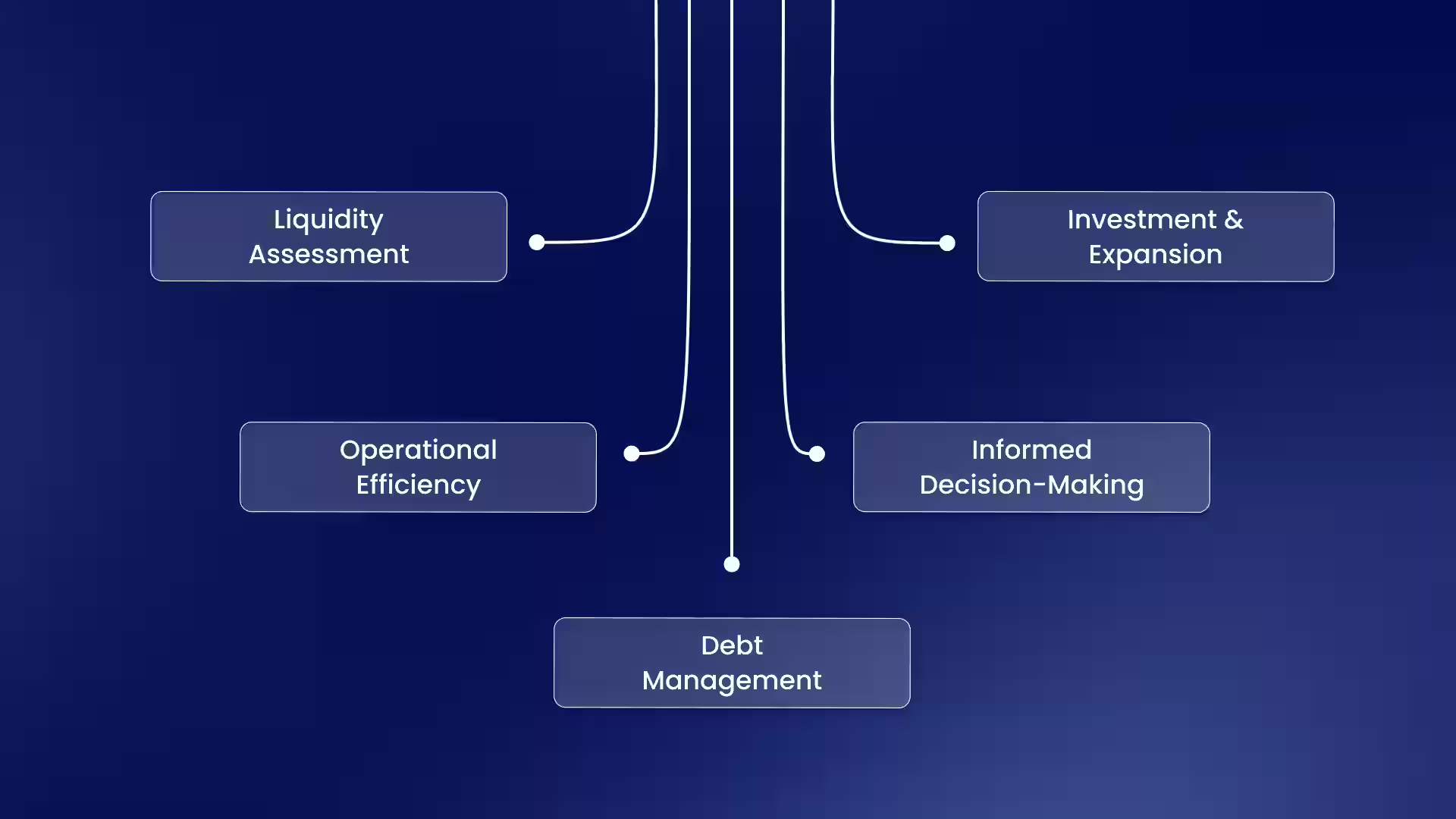
Its key significance includes:
-
Liquidity Assessment – Determines a company's ability to meet short-term obligations.
-
Operational Efficiency – Identifies financial inefficiencies across financing, investing, and operational activities.
-
Debt Management – Reveals how cash is allocated for debt repayment and capital raising.
-
Informed Decision-Making – Helps forecast future cash needs and guides financially viable strategies.
-
Investment & Expansion – Indicates whether adequate reserves exist to pursue growth opportunities.
What is Cash Inflow?
Cash inflow refers to the influx of money into a business from revenue streams or other financial resources. Generating sufficient cash inflow is important for sustaining operations, investing in expansion, and meeting financial obligations.
Cash inflow can be obtained from multiple sources, including:
-
Sales Revenue: Revenue derived from sales of products and services is considered the primary source of cash inflow. The cash generated from this source is generally used to cover operating expenses and support day-to-day activities.
-
Returns on Investments: Cash proceeds also come from returns on investments in assets such as real estate, bonds, and stocks. These returns may be obtained from dividends, interest, or capital gains, ultimately contributing to cash inflow.
-
Proceeds from Loans and Financing: When the business has negative cash flow, owners resort to loans or other financing alternatives to inject a pool of money. These financing activities represent cash inflow.

-
Free Cash Flow: FCF or free cash flow indicates the cash remaining after deducting capital and operating expenditures. It can be calculated as:
FCF = Operating Cash Flow - Capital Expenditures
-
Grants and Subsidies: Startups operating in specific industries may qualify for government grants and subsidies, also considered a source of cash inflows. These funds can be leveraged for day-to-day expenses or other business activities.
What is Cash Outflow?
“The three most dreaded words in the English language are ‘negative cash flow.”
David Tang
Cash outflow refers to the funds that exit a business, typically allocated towards expenses, investments, and debt repayments essential for maintaining operational sustainability. It represents cash spent on salaries, debt repayments, and other financial commitments.
Cash outflows are crucial in financial management, reflecting the company's capacity to allocate resources effectively to sustain operations and support growth initiatives. However, if they continue for a prolonged period without a corresponding revenue increase, it can pose challenges. This necessitates effective cash outflow management for the business to sustain and function optimally.
Businesses incur cash outflow due to the following reasons:

1. Operating expenses: These include salaries, rent, utilities, and supplies. Operating expenses must be managed carefully to prevent negative cash flows.
2. Capital Expenditures (CapEx): Capital expenditures include cash spent purchasing or upgrading physical assets such as machinery, property, and equipment. Although investments in these expenses increase organisational efficiency, startup owners must mindfully invest as this can significantly increase cash outflows.
3. Debt Repayments: Most cash outflows are due to debt payments, such as interest and principal. Managing debt effectively is crucial to minimising a negative cash flow.
4. Investment Purchases: Businesses invest in other companies or financial instruments, which requires cash expenditure, resulting in cash outflows.
5. Dividends: Paying dividends to shareholders also incurs cash outflows. These reduce the cash available for reinvestment in the business.
Differences Between Cash Inflow and Cash Outflow
|
Cash Inflow |
Cash Outflow |
|
Cash that flows into a business is called cash inflow. |
Cash that flows out of the business is called cash outflow. |
|
Represents receipts of money. |
Represents payments of cash. |
|
Sources include sales revenue, loans received, etc. |
Sources include payment for expenses, loan repayments, purchasing machinery and equipment, etc. |
|
Its primary purpose is to increase liquidity and financial resources. |
Its primary purpose is to reduce liquidity and financial resources. |
|
Positive impact on cash flow and improves the overall financial health. |
Negative impact on cash flow. |
Why Maintain a Positive Cash Flow?
“Happiness is a positive cash flow.”
-
Fred Adler
Maintaining a positive cash flow determines a startup’s commitment to financial management. In other words, it reflects that a company is generating more cash than it is spending. It provides long-term benefits that include:
-
Improved Credit Score: Maintaining a positive cash flow for an extended period showcases a startup’s creditworthiness. Investors or lenders typically assess a company’s credibility before approving loans, and a positive cash flow ensures that the startup receives the required financing at favourable terms and interest rates.
-
Enhanced Operational Efficiency: A positive cash flow enables businesses to meet day-to-day operations promptly, including paying employees on time and covering overhead costs. Entrepreneurs can avoid financial disruptions caused by cash shortages.
-
Investment and Debt Settlement: With a healthy cash flow, businesses can invest part of their cash reserves into marketing or R&D. Startups benefit from effectively managing debt obligations and rewarding their investors with dividends. This increases investor confidence and attracts more capital for future growth.
-
Improved Financial Planning: Maintaining a positive cash flow doesn't just provide a financial cushion; it also simplifies budgeting and planning for the future. When money consistently flows in, you have a clear understanding of your company's financial landscape. With an accurate picture of your cash inflows and outflows, you can confidently plan financial projections, allowing you to make informed decisions about upcoming projects, expenses, and investments.

Calculating Cash Flow
Cash flows can be calculated using multiple methods and formulas. However, the most used formula for calculating cash flow by financial experts is:
Net Cash Flow = Total Cash Inflows - Total Cash Outflows
This fundamental equation captures the essence of cash flow management, providing a clear view of the net change in cash over a specific period. Consider a hypothetical example of Tech Innovations Inc. to illustrate how cash flow is calculated.
Scenario
In the third quarter of the year, Tech Innovations Inc. experiences various cash inflows and outflows. Here’s a breakdown of their financial activities:
Cash Inflows
-
Sales Revenue: $150,000 (from product sales)
-
Investment Income: $10,000 (from interest on investments)
-
Loan Proceeds: $40,000 (new loan taken)
Total Cash Inflow:
= Sales Revenue + Investment Income + Loan Proceeds
= $150,000 + $10,000 + $40,000
= $200,000
Cash Outflows
-
Operating Expenses: $70,000 (salaries, rent, utilities)
-
Cost of Goods Sold (COGS): $30,000 (materials and production costs)
-
Equipment Purchase: $20,000 (new machinery)
-
Loan Repayment: $10,000 (partial repayment of the loan)
Total Cash Outflow:
= Operating Expenses + COGS + Equipment Purchase + Loan Repayment
= $70,000 + $30,000 + $20,000 + $10,000
= $130,000
Net Cash Flow Calculation
To find the net cash flow for Tech Innovations Inc., we subtract total cash outflows from total cash inflows:
Net Cash Flow:
= Total Cash Inflow - Total Cash Outflow
= $200,000 - $130,000
= $70,000
In the above example, cash flow is calculated using a straightforward approach. The table below highlights some other ways to calculate cash flows from operating, investing, and financing activities
|
Types of Cash Flow |
Calculation Formula |
|
Operating Cash Flow |
Net income + depreciation and amortisation + accounts receivable + inventory + accounts payables |
|
Investing Cash Flow |
Incoming investment cash flows - outgoing investment cash flows |
|
Financing Cash Flow |
Incoming financing cash flows - outgoing financing cash flows |
Challenges to Cash Flow Management for Startups
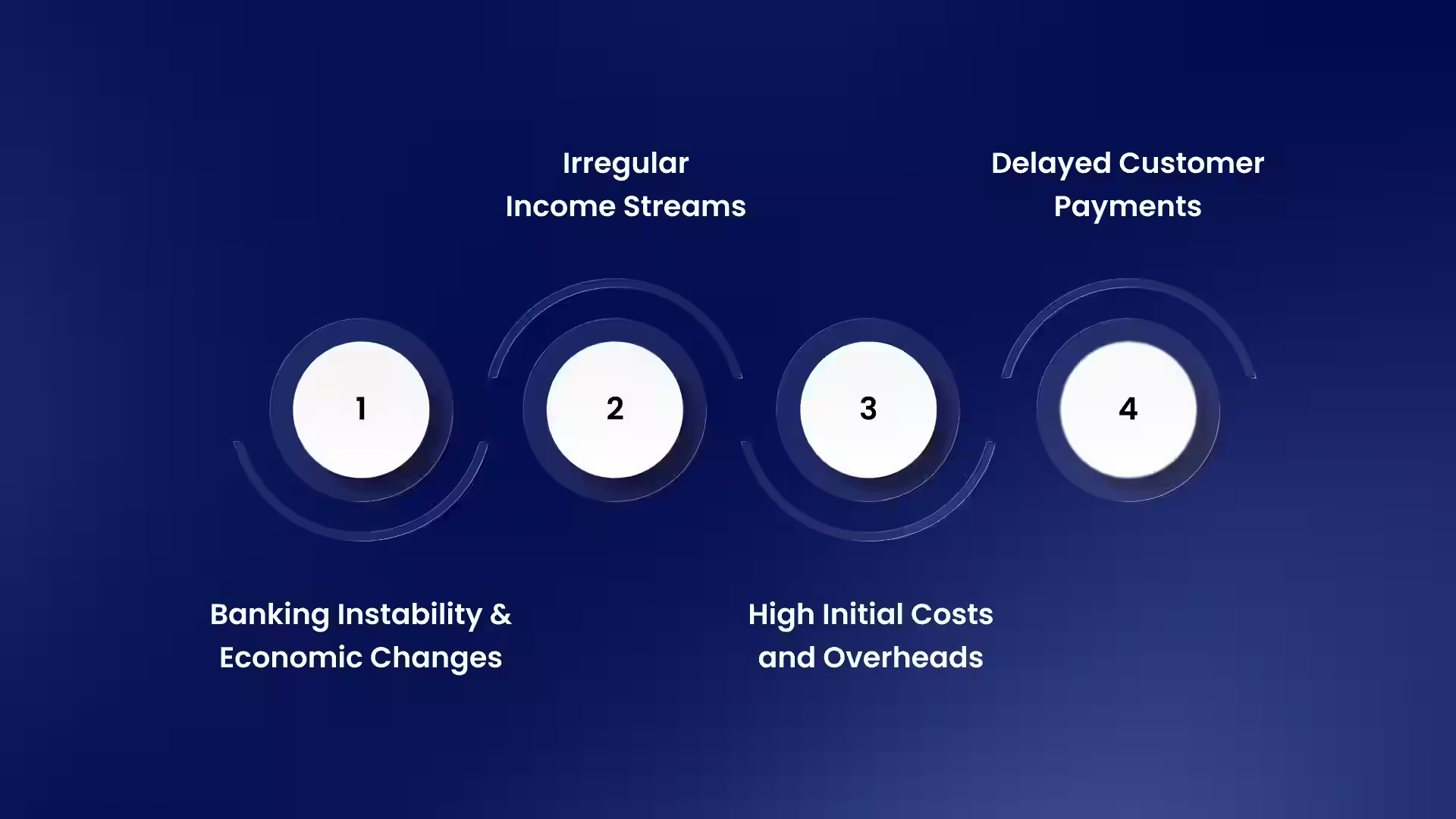
1. Banking Instability and Economic Changes
Recent banking failures and economic shifts have significantly impacted startup cash flow management. As the economic environment becomes more challenging, venture capitalists (VCs) have become more cautious, focusing on startups with sound economics and realistic growth trajectories. This means that startups now face longer fundraising processes with more investor-friendly deal terms, which can lead to delayed cash inflows.
2. Irregular Income Streams
Many startups, especially those in the early stages with inconsistent sales or clients, face the challenge of irregular income streams. This unpredictability can make it hard to manage expenses, pay suppliers on time, and plan for future growth.
3. High Initial Costs and Overheads
High initial costs, such as product development, marketing, and operational expenses, often lead to cash flow shortages. Startups may also underestimate costs or spend too much on overhead, resulting in a lack of cash to cover essential expenses.
4. Delayed Customer Payments
Managing accounts receivable is another challenge, as customers may delay payments, causing a cash flow crunch. This makes it difficult for startups to meet their obligations, such as paying salaries, rent, or suppliers on time.
While startups often face significant challenges in managing cash flow, such as unpredictable revenue streams and high operational costs, implementing strategic enhancements in cash flow management can empower them to navigate these obstacles effectively.

Struggling to Manage Cash Flow Gaps?
Every growing business needs timely and well-structured finance to maintain momentum. Whether it's managing day-to-day operations or funding expansion, access to the right capital can make all the difference.
Recur Club helps startups bridge cash flow gaps without disrupting growth. With access to a wide network of lenders and flexible financing options, businesses can unlock working capital exactly when they need it.
Case Study: MoveInSync, India's largest employee commute solution, was struggling with working capital gaps and fundraising efforts that stretched over six months, diverting focus from core operations. By partnering with Recur Club, they completed due diligence in just two days and went on to raise debt capital six times, ultimately achieving over 300% revenue growth in FY2023.
Here’s why businesses choose Recur Club:
-
125% average revenue increase among funded customers
-
98% customer satisfaction rate
-
₹3,000+ crore in total capital facilitated
Have questions? Get in touch with Recur Club’s capital experts and explore financing options tailored to your business needs.
Final Word
Negative cash flow is a common challenge for startup founders, especially in the early stages. To operate effectively in competitive markets and make informed financial decisions, businesses need a clear understanding of how cash moves in and out.
Financing solutions have evolved to address these gaps more efficiently. Today, businesses can access capital without heavy collateral requirements, explore multiple lending options, and choose structures that align with their cash flow cycles and growth plans.
Instead of letting liquidity constraints limit momentum, startups and SMEs can leverage these innovations to stay agile, manage working capital better, and invest confidently in growth opportunities.
Frequently Asked Questions
1. Can a profitable business have negative cash flow?
Yes, and it’s more common than most founders realise. Profit is recorded on paper (accrual accounting), but cash flow depends on when money actually hits your bank account. For example, ₹50 lakh in booked sales with 90-day payment terms means the cash hasn’t arrived yet. This gap is exactly why cash flow statements exist alongside profit and loss statements. They show what’s real.
2. What is the difference between cash flow and working capital?
Working capital is a snapshot. It’s the difference between current assets and liabilities at a specific point in time. Cash flow is movement. It tracks how money flows over a period. A business can have strong working capital but still face a cash crunch if receivables aren’t collected or inventory isn’t moving. Working capital shows what you have. Cash flow shows how it moves.
3. How often should a startup track cash flow?
At minimum, monthly. Startups with less than 18 months of runway should track it weekly. The shorter the runway, the more important real-time visibility becomes. Weekly tracking helps catch delays, expense spikes, or collection gaps early. Mature businesses can rely on monthly tracking supported by a 13-week rolling forecast.
4. What is a 13-week cash flow forecast and why do lenders ask for it?
It’s a week-by-week projection of inflows and outflows over roughly three months. Lenders, especially NBFCs and institutional investors, use it to assess near-term liquidity. Unlike annual forecasts, it highlights exactly when cash shortages may occur. Being able to produce one signals strong financial discipline.
5. What is the difference between cash flow and EBITDA?
EBITDA measures operating profitability but ignores cash realities like capex, working capital changes, and debt repayments. Cash flow, especially free cash flow, includes these. A business can have strong EBITDA but limited actual cash. That’s why investors increasingly focus on free cash flow.
6. How does GST affect cash flow for Indian businesses?
GST creates a timing mismatch. You pay tax when you invoice, not when you receive payment. If customers take 60 days to pay, you’re effectively funding GST upfront. For MSMEs, this can strain cash flow. Managing it requires tighter collection cycles and better-aligned payment terms.
7. What is free cash flow and how is it different from operating cash flow?
Operating cash flow reflects cash from core operations. Free cash flow goes further:
Free Cash Flow = Operating Cash Flow − Capital Expenditures
It shows what’s actually available after maintaining assets. Asset-light businesses have smaller gaps between the two, while capital-intensive businesses see larger differences. Free cash flow is the more conservative health metric.
8. What happens to cash flow during rapid growth?
Growth often puts pressure on cash flow in the short term. You spend more on inventory, hiring, and infrastructure before receiving payments. This “growth trap” is why fast-growing startups still need working capital funding. The key is aligning financing with growth, not slowing down.
9. Can you improve cash flow without increasing sales?
Yes. Cash flow is as much about timing and efficiency as revenue. Extending supplier terms, shortening customer credit cycles, clearing idle inventory, or refinancing debt can all improve liquidity. Often, cash is already in the system, just not accessible.
10. What is the cash conversion cycle and why does it matter?
The cash conversion cycle (CCC) measures how long it takes to turn investments into cash:
CCC = Days Inventory Outstanding + Days Sales Outstanding − Days Payable Outstanding
A lower CCC means faster cash recovery and less reliance on external funding. Even reducing CCC by 15 to 20 days can significantly improve cash flow and reduce debt dependence.
Related Articles

Proforma Invoice Financing: How Businesses Fund Orders Before Billing
Proforma invoice financing helps fund orders before billing. Learn uses, format, examples, and how businesses manage upfront costs effectively.

Debt Financing Agreements for Indian Startups: Key Terms and Negotiation Tips
What is a debt financing agreement? A practical guide for Indian startups covering covenants, repayment terms, defaults, and risks.

Financial Forecasting for Startups: Build Projections That Help You Raise Capital
Master financial forecasting for startups with revenue, expense, and cash flow projections to plan growth and attract investors.
Talk to our experts and find the right financing solution.
Talk to Our Experts →