
What Is an Operating Lease? Meaning, Examples, Accounting & When SMEs Should Use It
Learn what an operating lease is, its key features, benefits, and when startups and SMEs should choose leasing over ownership.

For startups and SMEs managing tight liquidity cycles, deciding whether to buy or lease business assets is rarely straightforward. Large upfront investments can strain working capital, limit growth plans, and complicate future borrowing. It is a decision that touches cash flow stability, balance sheet structure, and long-term cost efficiency all at once.
The pressure to find flexible, low-capex alternatives is reflected in the numbers. India's enterprise asset leasing market reached USD 4.71 billion in 2025 and is expected to grow significantly as more businesses look to access essential assets without locking in capital.
An operating lease is one such option, but it comes with trade-offs that founders need to understand before signing. This blog breaks down what an operating lease is, how it works in practice, and how it compares to other financing options. It also outlines when leasing makes financial sense for SMEs based on cash flow needs, asset usage, and future funding plans, so you can make a more informed capital allocation decision.
Quick Overview
An operating lease allows SMEs to use assets without ownership, helping preserve cash flow while maintaining flexibility in business operations.
An operating lease is a short-term agreement where the business pays to use an asset, while ownership, risks, and residual value remain with the lessor.
It is commonly used for assets like vehicles, IT equipment, and machinery, where demand changes or frequent upgrades are needed.
Compared to finance leases, operating leases offer lower commitment and more flexibility, but do not build ownership value over time.
Under Ind AS 116, operating leases can impact financial statements by adding lease liabilities, affecting borrowing capacity and key ratios.
Recur Club is an AI-native debt platform and marketplace that helps SMEs access non-dilutive capital, enabling them to combine leasing with flexible funding for better cash flow and growth planning.
What Do You Mean by an Operating Lease?
An operating lease is an agreement where a business uses an asset for a fixed period without ownership. The lessor retains ownership, while the business pays periodic rentals for usage.
The lease term is usually shorter than the asset’s useful life, allowing the asset to be returned or renewed at the end of the contract. For startups and SMEs, lease payments are generally treated as business expenses, helping avoid high upfront costs and preserving capital for growth.
Common Examples in Indian Businesses
Operating leases are common where flexibility or frequent upgrades matter, including:
Office spaces with short-term commitments.
Logistics vehicles for changing demand.
Manufacturing equipment for specific production cycles.
IT hardware, such as laptops and servers, that quickly become outdated.
Managing assets while keeping cash for growth can be tricky. Recur Club works with startups and SMEs to structure capital smartly, so you can lease what you need without slowing expansion.

Characteristics of an Operating Lease
An operating lease has specific features that distinguish it from other leasing arrangements.
Ownership: In an operating lease, the lessor retains ownership, while the business only has the right to use the asset. Risks and rewards remain with the lessor.
Lease Duration: The lease term is shorter than the asset’s useful life, allowing the lessor to re-lease or sell it after the agreement ends, while the business avoids a long-term commitment.
Risk and Maintenance: Maintenance, insurance, and major repairs usually remain the lessor’s responsibility, reducing the operational burden on the business.
Residual Value: The business is not responsible for depreciation or resale value, which stays with the lessor.
Cancellation or Renewal Terms: Many leases allow renewal, upgrades, or early termination. Operating leases are often revocable, providing flexibility for changing business needs.
Operating Lease vs Finance Lease: Key Differences for Founders
Founders evaluate leasing to balance cash preservation with long-term ownership. The key difference is who bears the asset’s risks and rewards and end-of-lease expectations.

Accounting Note for Founders: Under Ind AS 116, finance leases usually appear on the balance sheet as both an asset and a liability, while operating leases may not, depending on the lease term and contract structure. For startups and SMEs, this means operating leases can help keep reported liabilities lower, preserving borrowing capacity and making financial ratios appear healthier, without changing the actual cash outflow.
Recommended: Flexible Invoice Finance: A Practical Solution for Working Capital Challenges.
When is an Operating Lease a Reliable Option for Startups and SMEs?
An operating lease is ideal when asset ownership adds little long-term value. For founders, the choice centres on capital allocation, flexibility, and risk management.
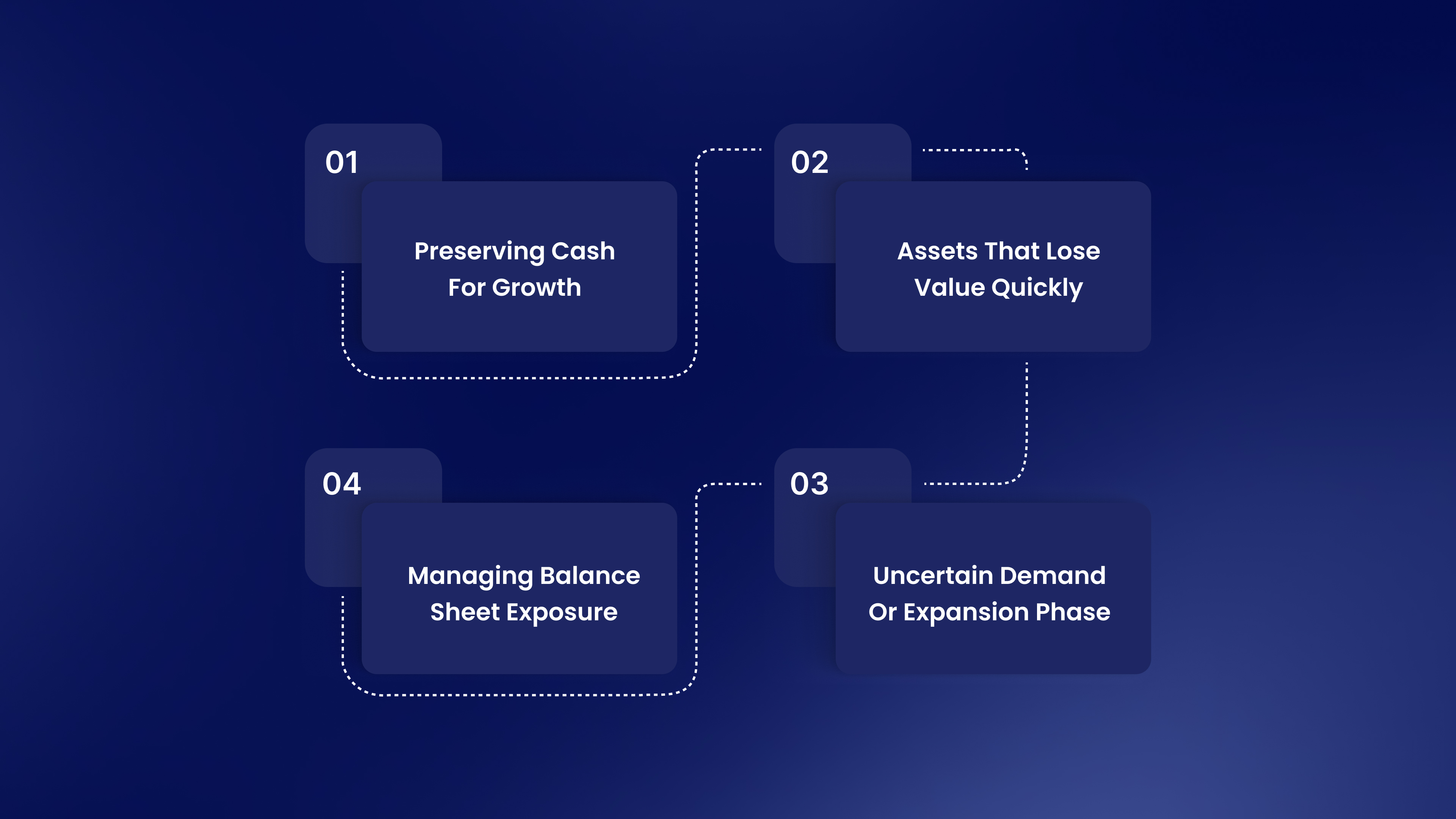
Preserving Cash for Growth: Leasing reduces high upfront costs, keeping cash available for hiring, inventory, or expansion while still accessing needed assets.
Assets That Lose Value Quickly: Technology, IT hardware, and equipment that depreciate fast are better leased, allowing upgrades without holding outdated assets.
Uncertain Demand or Expansion Phase: Operating leases minimise long-term ownership risk, letting businesses scale asset use up or down as demand changes.
Managing Balance Sheet Exposure: Leased assets under Ind AS 116 may affect financial statements. Using operating leases helps manage ratios and borrowing capacity without long-term commitments.
MoveInSync leveraged Recur Club’s capital to achieve 240% growth in just 10 months, showing how access to timely, non-dilutive funding can support smarter asset and leasing decisions during high-growth phases.
Benefits and Limitations of an Operating Lease
Benefits
Lower upfront investment: Businesses can use assets without large capital expenditure.
Flexibility: Easier upgrades or replacements at the end of the lease term.
Reduced obsolescence risk: Suitable for assets that lose value quickly.
Expense treatment: Lease payments are generally recorded as business expenses.
Limitations
No ownership value: The business does not build asset ownership over time.
Possible higher long-term cost: Total payments may exceed the purchase cost in some cases.
Contract restrictions: Usage limits or termination conditions may apply depending on the agreement.
Also Check: Types and Sources of Long-Term Funds for Businesses in 2026.
Operating Lease Accounting: How It Is Treated in Books
Operating lease accounting directly affects how your liabilities, profitability, and borrowing capacity are perceived. For founders managing cash flow or planning debt financing, this has a real impact on lender decisions.
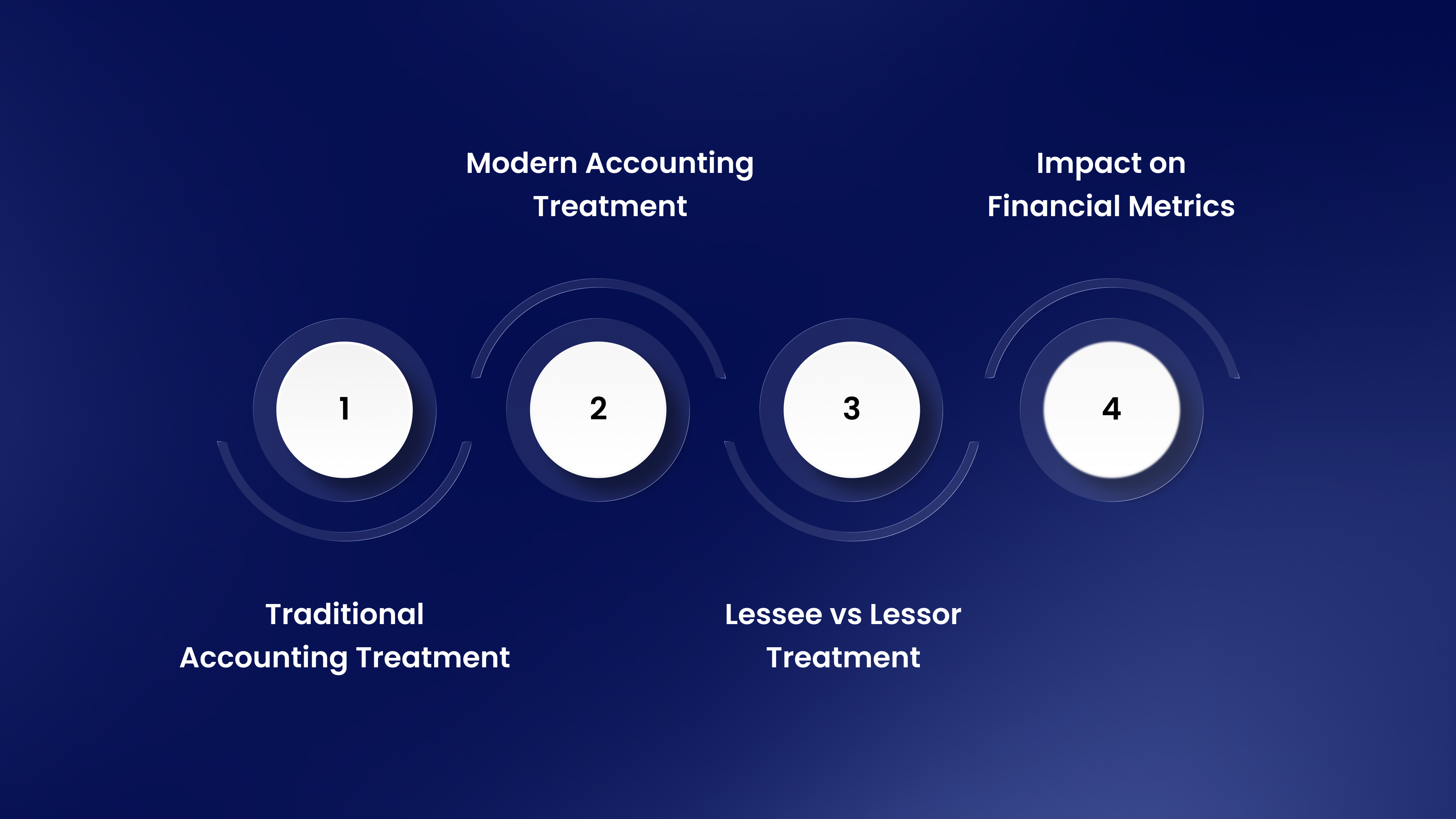
Traditional Accounting Treatment (Pre-Ind AS 116)
Earlier, operating leases were treated as off-balance sheet items:
Lease payments were recorded as operating expenses
No asset or liability appeared on the balance sheet
Obligations were disclosed only in notes to accounts
This made businesses appear less leveraged and improved financial ratios like debt-to-equity, often masking true long-term commitments.
Modern Accounting Treatment (Ind AS 116)
With Ind AS 116, lease accounting is more transparent.
Businesses must now recognise:
A Right-of-Use (ROU) asset
A lease liability equal to the present value of future payments
This brings most leases onto the balance sheet, increasing reported liabilities and making lease obligations visible to lenders. For founders, operating leases now function more like debt in financial evaluation.
Lessee vs Lessor Treatment
For the Lessee:
Recognises ROU asset and lease liability
Records depreciation and interest expense
For the Lessor:
Asset remains on their books in an operating lease
Rental income is recognised periodically
Understanding both sides helps in evaluating pricing and negotiating better lease terms.
Impact on Financial Metrics
Operating leases influence key lender-focused metrics:
EBITDA: Increases since lease costs shift to depreciation and interest
Balance Sheet: Assets and liabilities both rise
Ratios: Debt-to-equity increases, return on assets may decline, and interest coverage changes
These changes affect how lenders assess eligibility, risk, and repayment capacity.
Key Decision Checklist For Taking an Operating Lease
Choosing an operating lease is a financial strategy decision that impacts cash flow and future funding.
Checklist
Asset duration: Short-term or uncertain use favours leasing; long-term use may justify ownership
Cash flow: Leasing reduces upfront costs; buying may be cheaper over time
Growth plans: Leasing supports flexibility and upgrades during rapid scaling
Cost vs flexibility: Leasing costs more overall but requires less initial capital
Align the decision with your revenue cycles, expansion plans, and capital availability.
Questions to Ask Before Signing a Lease Agreement
Before committing to a lease, it is important to evaluate both financial and operational implications.
Financial Clarity
What is the total lease cost compared to the asset value
Are payments fixed or variable
Flexibility
Can the lease be exited early
Are upgrades or renewals allowed and under what terms
Accounting and Financing Impact
How will the lease affect the balance sheet liabilities
Will it impact future borrowing capacity
Operational Considerations
Who is responsible for maintenance and insurance
What happens in case of damage or underutilization
A structured evaluation helps avoid hidden costs, reduces cash flow strain, and protects your ability to raise debt in the future. Recur Club helps businesses with predictable revenue access flexible, non-dilutive capital, so they can manage asset decisions while maintaining steady cash flow for operations and growth.

Final Thoughts
An operating lease lets startups and SMEs use essential assets without locking capital into ownership. It works best when flexibility, cash preservation, and changing business needs matter more than long-term asset holding.
For many founders, leasing forms part of a broader capital strategy, balancing asset access with steady cash flow. Recur Club supports growing businesses with flexible funding options based on predictable revenue, helping founders manage expansion without slowing growth.
Why Recur Club?
Expert Consultation: Assess if debt suits your business.
Smart Capital Structure: Right lender, right terms, advisory-led.
Frictionless Disbursal: End-to-end execution until funds reach your account.
If your business is planning its next growth phase, connect with us to see how the right capital structure can support smarter financial decisions.
FAQs
1. Can an operating lease improve cash flow for startups?
Yes. Since businesses avoid large upfront payments, cash remains available for expenses such as hiring, inventory, or marketing. Regular lease payments also make expenses more predictable.
2. Are operating lease payments tax-deductible in India?
In many cases, lease rentals are treated as business expenses and may be deductible, subject to applicable tax rules and professional advice.
3. Which industries commonly use operating leases in India?
Logistics, manufacturing, SaaS companies, healthcare providers, and retail businesses often use operating leases for vehicles, equipment, and technology assets.
4. Does an operating lease affect borrowing capacity?
Lease commitments may influence financial ratios depending on accounting treatment, which lenders may review while assessing creditworthiness.
5. Can an operating lease be renewed or upgraded during the term?
Many agreements allow renewal, upgrades, or asset replacement based on predefined terms, which helps businesses adapt as requirements change.
6. Can an operating lease help preserve working capital?
Yes. It reduces upfront spending, allowing businesses to keep cash available for daily operations and growth needs.
7. Is an operating lease suitable for fast-growing startups?
Yes. It offers flexibility to scale assets up or down without long-term ownership commitments.
8. What happens at the end of an operating lease?
The asset is usually returned, renewed, or upgraded based on the lease agreement terms.
Related Articles

Solving Cash Flow Gaps: The Role of Working Capital Loans for Indian Startups in 2026
Explore when a loan for working capital is useful, its key uses, and how businesses can manage expenses and growth without cash flow gaps.

Confidential Invoice Discounting: Meaning, How It Works, and When to Use It for SME Cash Flow
Understand confidential invoice discounting, how it works, costs, and when SMEs should use it for faster, non-dilutive working capital.

Capital Efficiency: Meaning, Formula, and How to Improve It for Smarter Business Growth
Learn what capital efficiency means, how to calculate it, and how founders can improve it to grow faster without wasting capital.
Talk to our experts and find the right financing solution.
Talk to Our Experts →