
A 2026 Guide to the Startup India Seed Fund Scheme: Application and Eligibility Criteria
Learn how the Startup India Seed Fund Scheme works in 2026, including eligibility criteria, application steps, funding limits, benefits, and considerations.

Raising startup capital in India can become difficult once initial founder funding and personal networks run out. Many startups struggle to access structured funding during product validation and early growth stages.
To address this gap, the Startup India Seed Fund Scheme was launched with a corpus of ₹945 crore to support eligible startups through incubators across India.
Understanding how the scheme works, however, can still feel complicated for many founders. This guide explains the Startup India Seed Fund Scheme, including eligibility, funding structure, application steps, and funding considerations for growing startups.
A quick snapshot:
The Startup India Seed Fund Scheme helps eligible startups access funding through DPIIT-recognized incubators across India. The scheme supports product validation, commercialization, and startup growth activities.
Funding under SISFS includes grants, debt support, and convertible instruments based on startup requirements. Funds are usually released in stages through milestone-based disbursal structures.
Eligibility depends on DPIIT recognition, innovation potential, incorporation timeline, and Indian promoter ownership. Startups must also apply through approved incubators under the scheme.
The application process includes incubator selection, document submission, startup evaluation, and pitch presentations. Application tracking and funding updates are managed through the Startup India portal.
Growing startups often explore alternative financing models as funding requirements increase beyond seed-stage support. Common options include venture debt, revenue-based financing, and working capital funding.
What Is the Startup India Seed Fund Scheme?
The Startup India Seed Fund Scheme (SISFS) is a government-backed initiative launched by DPIIT to help eligible startups access early funding support through approved incubators across India. The scheme was introduced to bridge funding gaps that many startups face during product development, market validation, commercialization, and initial business growth stages.
Unlike traditional business loans, the SISFS focuses on supporting innovation-driven startups that may still be building revenue traction or validating their business model.
Some of the key objectives include:
Support Innovation: Help startups develop innovative products, services, and scalable business models.
Improve Funding Access: Enable startups to access structured funding during critical business stages.
Encourage Commercialization: Support businesses moving from product development to market entry and operational scaling.
Strengthen Incubators: Route funding through incubators that can provide mentorship, evaluation, and ecosystem support.
Reduce Funding Gaps: Help startups secure capital before they become investment-ready for larger institutional funding.
Boost Startup Growth: Encourage entrepreneurship, technology development, and startup expansion across sectors in India.
The scheme provides different types of financial support depending on the startup’s requirements and stage of development.
Suggested Read: Ways to Raise Working Capital
Types of Funding Available Under the Startup India Seed Fund Scheme
The Startup India Seed Fund Scheme offers different funding structures based on a startup’s stage, operational requirements, and commercialization goals. Funding is usually routed through approved incubators, which evaluate startups before recommending financial support under the scheme.

For startups that need faster access to growth capital beyond scheme-based funding, Recur Club can be a better option. It connects businesses with institutional lenders for flexible, non-dilutive funding tailored to cash flow, commercialization, and scaling needs. Talk to an expert to explore the right funding option for your business stage.

Eligibility Criteria for the Startup India Seed Fund Scheme
To qualify under the scheme, startups must meet specific DPIIT and incubator-led eligibility requirements before applying.
Some of the key eligibility criteria include:
DPIIT Recognition: The startup must be recognized by DPIIT under the Startup India initiative.
Incorporation Timeline: The startup should generally be incorporated not more than two years before the application date.
Scalable Business Model: The business should demonstrate market fit, commercialization potential, and scalability opportunities.
Technology Usage: The startup should use technology within its product, service, operations, distribution model, or problem-solving approach.
Sector Preference: Preference may be given to startups operating in sectors such as fintech, healthcare, agriculture, education, biotechnology, mobility, energy, defense, waste management, and social impact.
Funding Restrictions: The startup must not have received over ₹10 lakh in monetary support under other Central or State Government schemes, excluding grants such as prize money, subsidized workspace, or prototyping support.
Indian Shareholding: At least 51% of the startup’s shareholding must be held by Indian promoters at the time of application.
One-Time Funding Access: Startups can receive seed funding support under the scheme only once each for grant funding and debt or convertible instruments.
Not every startup may qualify under the SISFS, especially as businesses scale or funding requirements increase. Many startups eventually explore alternative financing models to support operational growth, market expansion, and larger capital needs.
Recur Club's AI-led debt marketplace helps match businesses with the right institutional lenders based on revenue, cash flow, and funding needs.
For example, Wellversed, a Gurgaon-based health and wellness startup, raised ₹6.5 Cr+ through Recur Club after completing due diligence in just 4 days, helping the company grow revenue by 117% and delay equity fundraising for a better valuation.

How Startups Are Selected Under the Startup India Seed Fund Scheme
The Startup India Seed Fund Scheme follows an incubator-led evaluation process to identify startups with strong innovation potential, scalability, and commercial viability. While the exact workflow may vary across incubators, most applications move through multiple screening and evaluation stages before funding is approved.
Below is the table showing the different stages in the application process to acquire seed capital:

You can track your application status, evaluation progress, and funding updates directly through the Startup India Seed Fund Scheme portal after submission.
Suggested Read: Underwriting Small Business Loans: Process, Criteria, and How to Improve Approval Chances
How to Apply for the Startup India Seed Fund Scheme
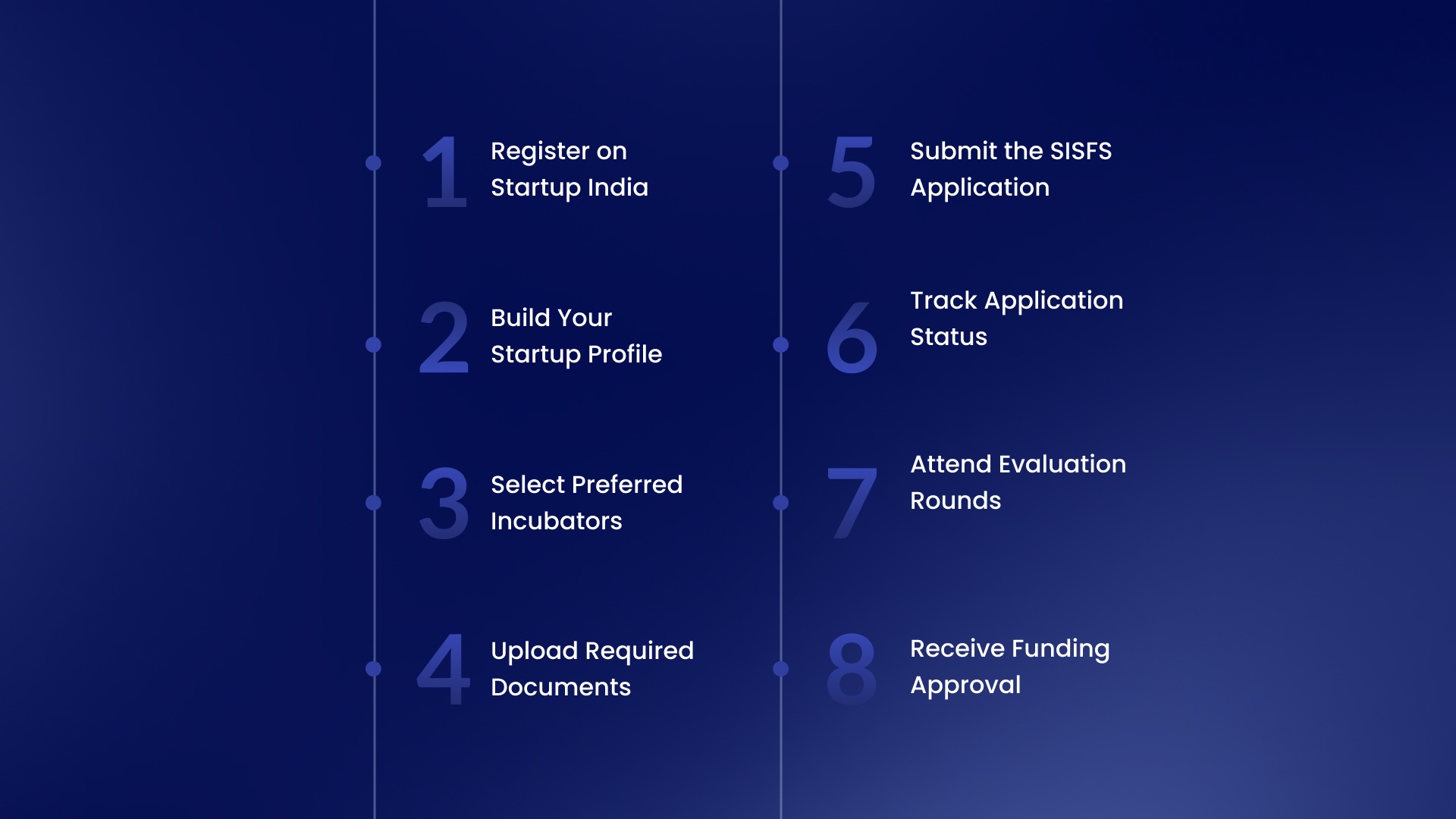
The Startup India Seed Fund Scheme application process is managed through the Startup India Seed Fund portal and participating incubators. Startups must complete registration, submit business information, upload documents, and undergo incubator-led evaluation before funding approval.
Steps include:
1. Register on Startup India
Complete these account setup steps:
Create a Startup India account
Obtain DPIIT recognition
Verify founder and company details
Access the SISFS application dashboard
2. Build Your Startup Profile
Prepare these business details:
Startup overview
Product or service description
Founder profiles
Market opportunity
Revenue and traction details
Funding requirements
3. Select Preferred Incubators
Review these incubator considerations:
Choose incubators aligned with your sector
Review incubator focus areas
Compare mentorship and funding support
Apply to relevant incubators through the portal
4. Upload Required Documents
Keep these documents ready:
Certificate of incorporation
DPIIT recognition certificate
Pitch deck
Business plan
Financial projections
PAN details
Founder KYC documents
Product demo or website links
5. Submit the SISFS Application
Complete these submission steps:
Fill out the online application form
Select incubator preferences
Upload supporting documents
Review application details carefully
Submit the application through the portal
6. Track Application Status
Monitor these application updates:
Application review status
Incubator responses
Evaluation progress
Interview or pitch notifications
Funding approval updates
7. Attend Evaluation Rounds
Prepare for these assessment stages:
Startup screening rounds
Pitch presentations
Innovation evaluation
Commercial viability review
Founder interaction sessions
8. Receive Funding Approval
Understand these post-selection stages:
Funding recommendations
Milestone-based disbursal
Compliance requirements
Reporting obligations
Grant or debt release timelines
The application process can become time-consuming due to incubator evaluations, documentation reviews, and milestone-based approvals. Many growing startups eventually explore financing options that offer faster processing timelines and more flexible access to capital.
Recur Club gives startups access to 100+ lending partners and multiple debt products through a single platform. Its AI engine, AICA, evaluates businesses across 200+ parameters to help founders discover financing options aligned with growth stage, cash flow, and expansion requirements.

How Seed Fund Disbursal Works Under SISFS
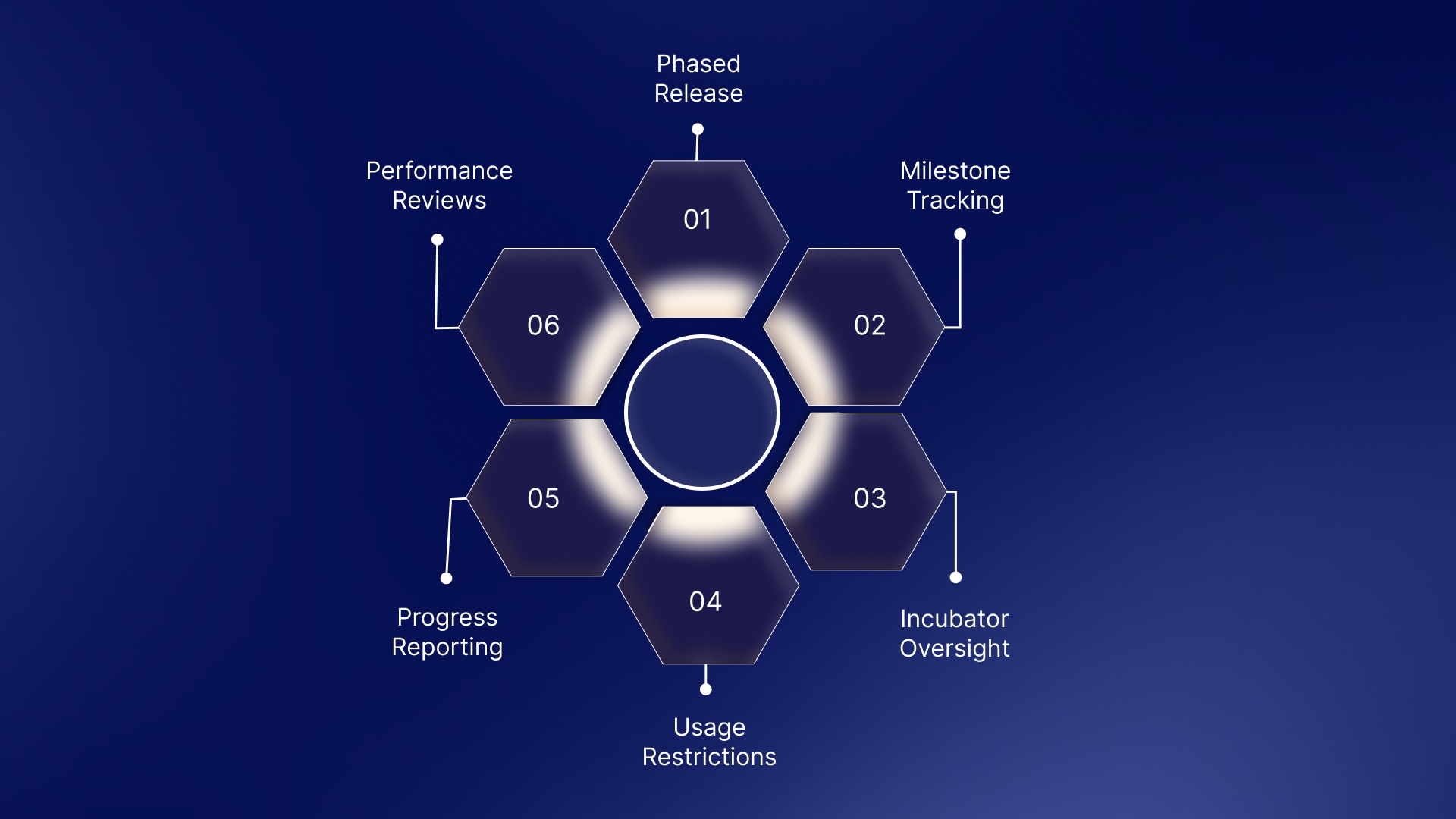
Approved startups do not usually receive the entire sanctioned amount at once. Funding is released in phases through incubators based on startup progress, milestone completion, and ongoing evaluation requirements.
Some important aspects of the disbursal process include:
Phased Release: Funds are typically disbursed in multiple stages instead of a single lump-sum payment.
Milestone Tracking: Startups may need to demonstrate progress in areas such as product development, validation, market entry, or commercial traction before receiving additional funding.
Incubator Oversight: Participating incubators monitor startup performance, utilization of funds, and reporting compliance throughout the funding cycle.
Usage Restrictions: Startups are expected to use funds only for approved operational, product, or commercialization activities.
Progress Reporting: Founders may need to submit regular updates, financial utilization reports, and milestone documentation to incubators.
Performance Reviews: Delays in milestone achievement or reporting requirements can sometimes affect future disbursal timelines.
This structure is designed to improve accountability and ensure capital is linked to measurable startup progress. At the same time, milestone-based funding can create operational challenges for startups requiring faster or more flexible access to capital during scaling phases.
Conclusion
While SISFS can help eligible startups access structured funding support, its selection process, milestone-based disbursals, documentation reviews, and funding limits may not always match the speed at which growing startups need capital.
This is where Recur Club can complement such funding options. We help startups explore debt solutions across venture debt, working capital financing, invoice financing, and revenue-based funding. Recur Club has already facilitated over ₹3,000 crore in capital deployment for startups and businesses across India.
Looking for financing that keeps pace with your startup’s growth plans? Talk to us to explore flexible funding solutions designed for scaling businesses.
Frequently Asked Questions
1. What is the Startup India Seed Fund Scheme?
The Startup India Seed Fund Scheme is a government initiative that provides early-stage funding support to eligible startups through approved incubators.
2. Who is eligible for the Startup India Seed Fund Scheme?
DPIIT-recognised startups incorporated not more than two years ago may apply, provided they meet the scheme’s eligibility criteria.
3. How much funding can a startup receive under SISFS?
Startups may receive up to ₹20 lakh as a grant for proof-of-concept, prototype development, or product trials, and up to ₹50 lakh through debt or convertible instruments for market entry or scaling.
4. How can startups apply for the scheme?
Startups can apply online through the official Startup India Seed Fund portal and select eligible incubators for evaluation.
5. Is the funding given directly by the government?
No. Funds are routed through approved incubators, which evaluate, select, and disburse funds to startups.
6. Can a startup apply to more than one incubator?
Yes. Startups can apply to up to three incubators through the portal.
7. What documents are required for SISFS?
Common documents include DPIIT recognition, incorporation details, founder information, business plan, pitch deck, financial details, and product or prototype-related information.
8. How is the seed fund disbursed?
Funds are usually disbursed in milestones based on the startup’s progress, documentation, and approval from the selected incubator.
9. Can startups that already received government funding apply?
Startups that have received more than ₹10 lakh in monetary support under any other government scheme are generally not eligible, except for certain exceptions, such as prize money or subsidised workspace.
10. What can SISFS funding be used for?
The funding can be used for proof of concept, prototype development, product trials, market entry, commercialisation, and early-stage scaling.
Related Articles
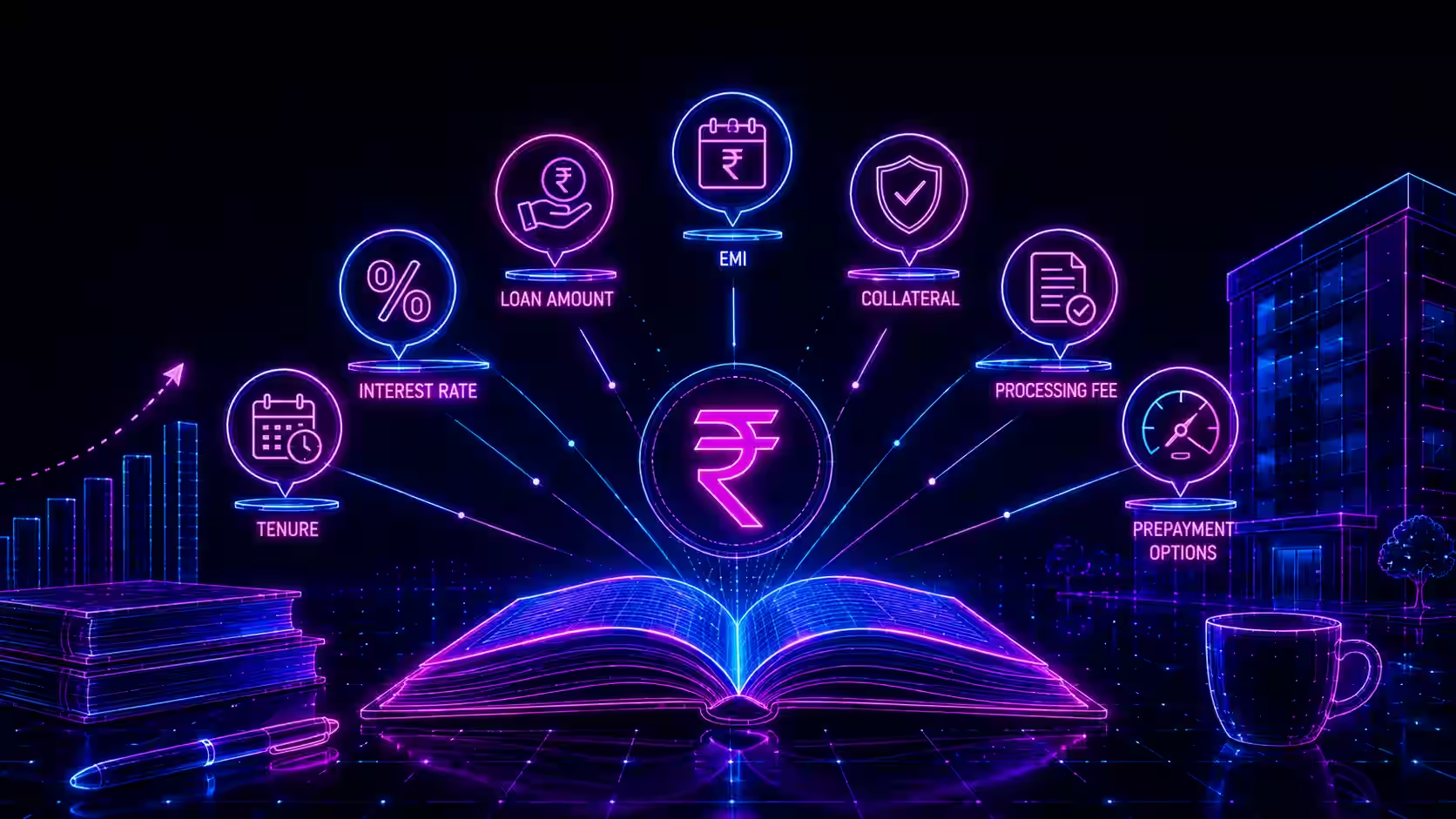
Common Business Loan Terms Every Indian Founder Should Know
Common business loan terms explained by stage, application, pricing, security, repayment, with real examples, RBI rules, and a quick-reference glossary.

SME Loans in Chennai: 2026 Guide to Financing
SME Loans in Chennai: from TIIC and NEEDS to CGTMSE-backed private lending, matched to your cluster, whether Oragadam, Ambattur, or OMR.

What Is a B2B Lending Platform? How They're Actually Built and Regulated in 2026
B2B lending platforms in India operate under strict RBI rules governing lender roles, fund flows, and co-lending. Here's how they actually work in 2026.
Talk to our experts and find the right financing solution.
Talk to Our Experts →